Why Climate Policy Frameworks Keep Breaking Down at the Implementation Stage
The Implementation Gap Between Climate Ambitions and Energy Realities
Climate policy frameworks have a weird habit: they sound amazing on paper but fall apart when they hit the real world. This happens everywhere, across different countries and political systems, which tells me the problem isn’t just bad execution. There’s something deeper going on between how we design climate policies and how energy transitions actually work.
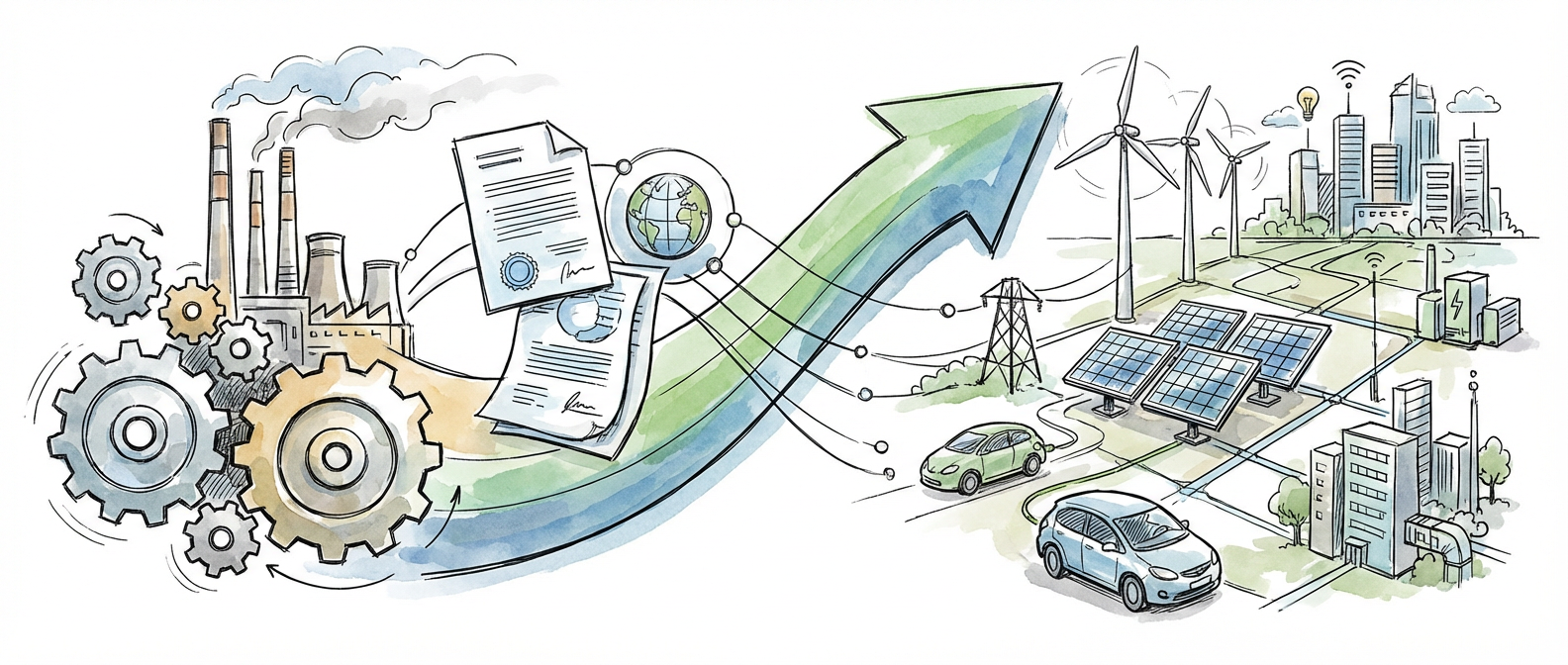
The main issue is timing. Politicians work on electoral cycles and international summits, which creates pressure for quick wins and measurable targets. Energy transitions work on completely different timescales. They follow infrastructure replacement cycles, technology learning curves, and stubborn human behavior patterns that take decades to shift. When policymakers try to speed this up using normal regulatory tools, they run into what looks like political opposition but is often just structural reality pushing back.
Look at the EU’s Green Deal. The policy design is actually pretty sophisticated, with carbon border adjustments and transition funds for affected regions. But implementing it means coordinating trade policy, industrial policy, agricultural policy, and regional development. These areas have always worked independently, with different experts, different stakeholders, and different ways of making decisions. Getting them to work together isn’t just a technical challenge.

Institutional Fragmentation and Policy Coherence Challenges
Energy transitions need coordination across government departments that were built for a different world. Traditional energy policy focused on keeping the lights on at reasonable prices. Environmental concerns were handled separately by environmental agencies. Climate policy frameworks try to flip this around, making decarbonization the main goal while keeping energy security and economic competitiveness as side objectives.
This creates a mess because these departments have developed different expertise, different relationships with industry, and different ways of making decisions. Energy agencies worry about blackouts and fuel supplies. Economic development folks focus on jobs and industrial competitiveness. Environmental agencies want emission cuts. Climate frameworks need these groups to work as one system, but there’s no good way to resolve conflicts when their goals clash.
The situation gets worse because affected industries know how to play these divisions. When renewable developers get stuck in environmental permitting, they lobby economic agencies for faster approvals. When fossil fuel companies face carbon pricing, they argue for exemptions based on trade competitiveness. This isn’t just rent-seeking behavior. It’s a rational response to government agencies that aren’t talking to each other.
The Scale-Dependent Nature of Energy System Change
Energy transitions work differently at different scales, and this complicates policy design. At the household level, energy decisions depend on specific building characteristics, local prices, financing options, and what neighbors are doing. Regional energy systems reflect decades of investment in particular infrastructure and local resources. National policy has to balance energy security, economic impacts, and international commitments.
Climate policies usually try to handle this complexity through top-down approaches: set national targets, then delegate implementation to states and cities. This works fine for things like emissions standards for cars, where you want uniform rules. But energy transitions need flexible implementation that adapts to local conditions while maintaining overall credibility. The trick is designing policies that allow local flexibility without undermining national commitments.
Germany’s Energiewende shows both the promise and problems of this approach. The policy successfully attracted massive private investment in renewables by guaranteeing long-term prices that reduced financial risks. But all that renewable capacity created new problems for grid stability that required different policy tools operating at different levels. Now there’s ongoing tension between federal energy policy, state grid planning, and local land use decisions.
Market Design and Technological Uncertainty
Climate policies have to deal with massive uncertainty about which technologies will work best for deep decarbonization and how quickly costs will fall. This creates a classic dilemma: technology-neutral policies might not create enough scale to drive down costs for promising technologies, while picking specific technologies risks locking in bad choices or creating stranded assets when better options emerge.
Making this harder is the fact that energy markets were designed for large, centralized power plants with predictable fuel costs and well-understood operations. Renewable technologies have completely different economics: high upfront costs but nearly zero operating costs, variable output that depends on weather, and rapidly falling costs driven by global manufacturing rather than local fuel extraction.
These characteristics need new market designs that provide proper investment signals while keeping the lights on. Climate frameworks typically use multiple policy tools: renewable standards to drive deployment, carbon pricing to internalize environmental costs, and various capacity markets to ensure reliability. How these interact is complex and poorly understood, creating ongoing debates that reflect genuine uncertainty rather than simple ideological disagreement.
Building Adaptive Governance for Long-Term Transitions
Given these structural challenges, we need governance approaches that explicitly expect uncertainty and build in ways to adapt as we learn. This means moving beyond static policy frameworks toward institutions that can evolve as we discover what works and as technologies change. Adaptive governance requires better feedback between implementation and design, more systematic attention to coordination across scales, and institutions that can manage trade-offs as they emerge.
The most promising developments combine long-term commitments with regular review processes that allow course corrections based on evidence. These approaches typically use independent technical institutions that can assess progress and recommend changes without getting caught up in short-term politics, while maintaining democratic accountability through legislative oversight.
Understanding these dynamics is important for anyone trying to evaluate climate policies or engage in climate debates. The challenges are real and substantial, but they’re not impossible if we approach them with appropriate tools and realistic expectations about how complex this actually is.

The Carbon Offset Illusion: Why Market Mechanisms Serve Capital, Not Climate Justice
When the Center Cannot Hold: Nationalist Movements and Historical Echoes
Who Really Profits from Carbon Markets?
About Author
