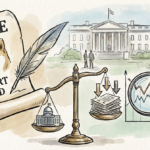
The Deceptive Arithmetic of Efficiency When the Department of Government Efficiency began its systematic review of federal expenditures in early 2025, foreign aid was an obvious target. It has all the qualities that make for compelling political rhetoric: it appears discretionary, it benefits foreigners rather than American voters, and it exists at sufficient remove from
The Scale of the Suspension In February 2025, the Department of Government Efficiency, operating under Elon Musk’s leadership, suspended roughly 85 percent of USAID’s foreign assistance contracts. This was not a gradual policy adjustment or a targeted reform. By any measure, it was a near-total halt to the machinery through which the United States had
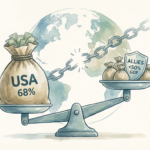
The Structural Problem Behind the Numbers The NATO Summit scheduled for The Hague in June 2025 arrives at a strange moment in alliance history. For the first time since the 2014 Wales Summit formalized a collective 2% GDP defense spending pledge, the conversation has shifted decisively toward raising that baseline. The question on the table
The August 2025 Enforcement Cliff Nobody Really Saw Coming Most trade disputes announce themselves gradually. Tariffs creep upward. Subsidies get quietly expanded. Regulatory standards drift apart over years of accumulated precedent. The enforcement deadline for the European Union’s AI Act high-risk provisions on August 2, 2025, did none of these things. It arrived like a
The Arithmetic of Constraint Germany’s federal election on February 23, 2025, looks straightforward on the surface but gets complicated fast. Friedrich Merz’s CDU/CSU took roughly 28.5% of the vote, making it the Bundestag’s largest faction. Easy to read that as a mandate for center-right governance. But 28.5% in a fragmented parliament isn’t governing authority. The
The Structural Problem Democrats Cannot Wish Away Every political party operative learns eventually that elections are not won in a vacuum. They are won within the constraints of geography, demography, and the calendar. For Democrats heading into 2026, this reality presents a challenge so serious that it deserves more careful analysis than the usual punditry
The Enforcement Moment That Divides the Atlantic We’ve reached a genuine inflection point in technology governance, though you might not notice it from the usual rhythm of regulatory announcements. In August 2025, the EU’s AI Act moved from theoretical framework to operational reality for high-risk AI systems. Not a partial implementation. Not a voluntary guidance
The Baseline Question: What Are We Actually Measuring? When we talk about federal workforce reductions, we run into a deceptively simple problem almost immediately. The Department of Government Efficiency, under Elon Musk’s direction, has made bold claims about identifying over $55 billion in potential savings by early 2026. These figures dominate headlines and shape public
The Constitutional Question Hiding Behind the Headlines When the Trump administration issued its January 2025 executive orders dramatically expanding interior immigration enforcement, something unusual happened in the American federal system. Rather than the typical pattern where states grumble about federal mandates while ultimately complying, governors in at least eleven states moved quickly to issue their
The Mechanics of a Continental Shift We are witnessing something that political scientists will spend decades unpacking: the simultaneous rise of nationalist parties across Europe, now holding coalition government positions in eight EU member states as of 2026. This is not a fringe phenomenon. These are not marginal voices shouting from the sidelines. These are