When International Law Meets Geopolitical Reality: The Gaza Advisory Opinion and the Limits of Global Governance
The July 2024 Opinion That Changed Nothing and Everything
In July 2024, the International Court of Justice issued a landmark advisory opinion declaring Israel’s occupation of Palestinian territories unlawful under international law. On its surface, this represented a seismic shift: for the first time in the court’s 80-year history, it directly addressed the legal status of the occupation itself, not merely specific policies or actions within it. The opinion’s breadth was striking. The ICJ didn’t hedge with procedural language or narrow its findings to particular incidents. It concluded that the occupation itself constituted a violation of international law, establishing what legal scholars call a “per se unlawfulness” framework.
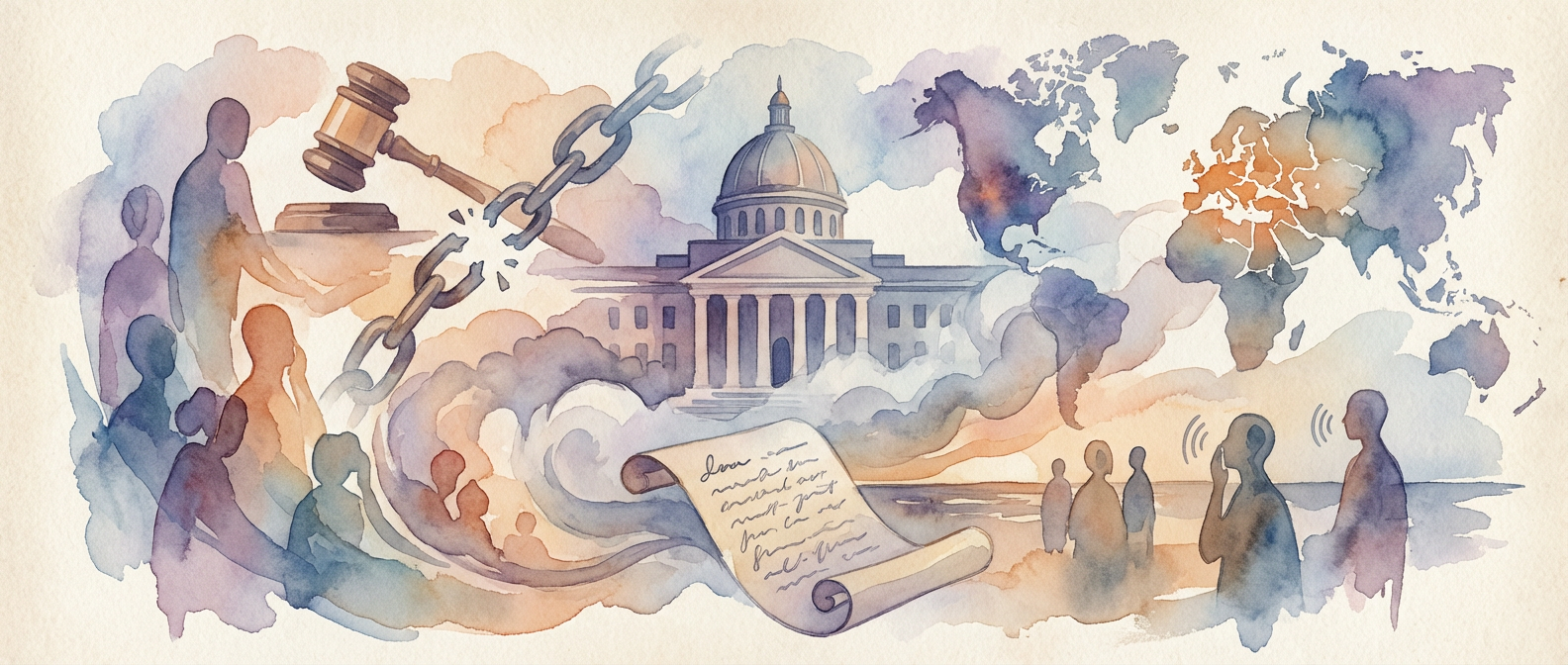
Yet within weeks of this judgment, something peculiar happened. The international system continued precisely as before. Israel rejected the opinion’s authority, the United States declined to enforce it, and life in Gaza remained catastrophic. This apparent paradox, a seemingly authoritative ruling that generated no immediate consequences, reveals something fundamental about how international law actually operates in the modern world. The ICJ has no enforcement mechanism. No police force exists to implement its decisions. What it has instead is legitimacy, and legitimacy turns out to be a far more fragile commodity than most civics textbooks suggest.
The Enforcement Gap and Who Pays the Price for Inaction
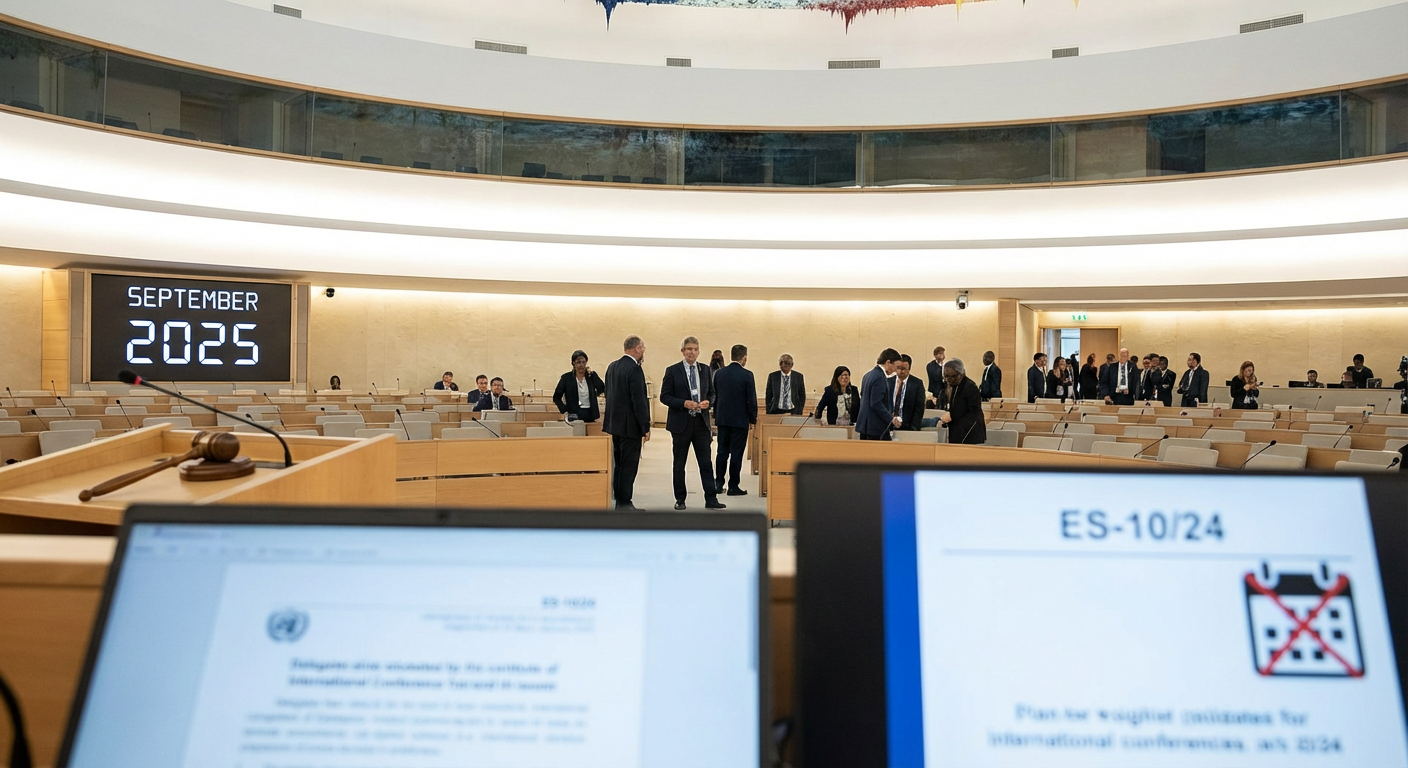
Three months after the ICJ opinion, the UN General Assembly passed Resolution ES-10/24 with 124 states voting in favor, explicitly demanding compliance with the court’s findings and calling for an end to the occupation within twelve months. That twelve-month window has since passed without the occupying forces withdrawing. The resolution contained no enforcement mechanisms, no sanctions, no consequences for non-compliance. It was essentially an international petition with a timestamp. Understanding why requires examining the actual incentive structure facing major powers.
The United States faces a particular constraint: Israel is a close military ally in a strategically vital region, home to significant American military infrastructure and intelligence operations. Any serious enforcement of the ICJ opinion would require the United States to either lead a coalition against Israel or abstain from protecting it, both politically costly domestically. European states, which voted overwhelmingly for the resolution, lack military capacity to enforce anything independently. The states with enforcement capacity, the UN Security Council’s permanent members, include Russia and China, who view the Gaza situation through competing geopolitical lenses rather than as a purely legal question. This creates what political economists call an enforcement vacuum: legal authority exists, but the distribution of power makes enforcement prohibitively expensive for any actor willing to pay the cost.
The real enforcement occurs through indirect mechanisms: state recognition, diplomatic isolation, and financial consequences. In May 2024, Ireland, Norway, Spain, and Slovenia formally recognized Palestinian statehood, joining 144 other UN member states in doing so. This number has continued climbing, now standing at 148 states as of early 2026. Each recognition represents a small economic and diplomatic decision: it signals alignment with international legal principles, it potentially affects trade relationships and cultural standing, and it positions a state as committed to international law even when that commitment is inconvenient. These aren’t consequences imposed by enforcement structures. They’re choices made by individual states managing their own reputational investments.
The ICC Warrants and the Problem of Selective Justice
In November 2024, the International Criminal Court took an even more dramatic step, issuing arrest warrants for Israeli Prime Minister Benjamin Netanyahu and former Defense Minister Yoav Gallant for alleged war crimes and crimes against humanity. Netanyahu became the first sitting leader of a close American ally to face ICC prosecution. Yet the warrants generated a curious response. Rather than triggering the enforcement mechanisms one might expect from a functioning global legal system, they exposed the deep fissures in how international law operates when powerful states reject its authority.
Israel and the United States both rejected the ICC’s jurisdiction and the legitimacy of the warrants. The U.S. Congress passed legislation threatening sanctions against the ICC if it pursued the case. Meanwhile, allied states faced their own calculations. Countries with strong U.S. security relationships, like the UK and Germany, found themselves in an awkward position: they’re parties to the Rome Statute, which legally obligates them to enforce ICC arrest warrants, yet doing so against Netanyahu would strain critical security partnerships. Most resolved this by simply not arresting him when he visited their territories. The warrants exist in a state of suspended animation, legally valid but practically unenforceable absent dramatic political shifts.
This selective enforcement problem extends beyond the Netanyahu case. The ICC has historically faced accusations of focusing disproportionately on African and weaker states while rarely touching the most powerful actors. The recent warrants challenge this pattern, but in a way that reveals how enforcement depends entirely on political will rather than legal principle. The court’s legitimacy rests on its ability to apply law uniformly, yet its effectiveness depends on powerful states choosing to comply. This tension is not accidental. It’s baked into the structure of international institutions.
The Genocide Question and How Language Becomes Ammunition
In March 2025, UN Special Rapporteur Francesca Albanese submitted a detailed report to the Human Rights Council that formally employed the term “genocide” in characterizing events in Gaza. This represented a significant escalation in language, moving beyond “war crimes” or “crimes against humanity” to the term that international law treats as the gravest possible charge. Albanese’s conclusion drew support from 34 governments, who cited her findings in subsequent diplomatic statements. Israel and the United States vehemently disputed the characterization, arguing that the death toll, while tragic, did not meet the legal threshold for genocide and that distinguishing between civilian casualties and genocidal intent matters legally.
The disagreement here is not merely semantic. International law defines genocide with specific requirements: it requires showing that perpetrators possessed intent to destroy a group in whole or substantial part. This is genuinely difficult to prove definitively, and reasonable jurists disagree about whether the available evidence meets this threshold. Yet the disagreement has also become economically and politically consequential. States that accept the genocide characterization face pressures to impose sanctions, restrict trade, and withdraw recognition. States that reject it position themselves as defenders of Israel and critics of what they view as politically motivated justice.
What’s revealing here is how the designation of a legal category becomes a proxy for political alignment. The genocide question isn’t purely a technical legal matter anymore. It’s become a visible marker of whether a government prioritizes international legal norms or strategic relationships. International Court of Justice: Legal Consequences Arising from Israeli Policies Advisory Opinion established the legal framework, but the genocide designation became the more politically charged marker. States that use the term signal commitment to a particular interpretation of international justice. Those that resist it signal concern about precedent and skepticism about politicized courts. Both positions carry real consequences for trade, tourism, and diplomatic relationships.
The Uncomfortable Truth About International Law’s Actual Function
After reviewing the ICJ opinion, the General Assembly resolution, the ICC warrants, and the genocide characterization, we’re left with an inconvenient observation: international law operated exactly as designed, which is to say it failed to prevent the policies it declared illegal. This isn’t a flaw in the system. It’s the system itself. International law functions primarily as a language for legitimating state behavior and a framework for signaling commitment to particular values. It’s genuinely influential, since states care about compliance and international standing, but its influence operates through reputation and incentives rather than through binding enforcement.
This creates an interesting dynamic. The very states most likely to face ICC warrants or ICJ judgments are often those whose domestic political constituencies prioritize national interest over international legal compliance. Meanwhile, states that genuinely respect international law institutions are rarely the ones facing charges. The system tends to constrain the already-constrained and fails to constrain the powerful. UN General Assembly Resolution ES-10 Documentation gathered 124 votes precisely because countries already sympathetic to Palestinian statehood supported it, not because the resolution changed any minds about what should happen.
Yet dismissing international law as purely performative misses something important. When 148 states recognize Palestinian statehood, when multilateral institutions issue formal opinions on occupation and genocide, when arrest warrants appear even if they’re not enforced, these aren’t meaningless gestures. They establish records. They create legal precedents that future courts will reference. They signal to domestic audiences and to historical judgment that certain governments chose to prioritize law even when inconvenient. They make the naked exercise of power somewhat less nake

The Political Economy of Water Privatization
Things You Should Know About Finding a Credit Card No SSN
The Honest to Goodness Truth on Getting a US Credit Card for Canadians
About Author
