When Courthouses Empty: Mexico’s Judicial Revolution Hits Main Street
The Mathematics of Constitutional Change
When Mexico’s legislature passed its judicial reform amendment last September with an overwhelming 83% approval rate, the numbers told only part of the story. The Mexican Constitutional Amendment Text requires that every federal judge, from local magistrates handling property disputes to Supreme Court justices deciding constitutional questions, must now face popular election. This is the most radical restructuring of a judicial system in the Western Hemisphere since Brazil’s 1988 constitution.
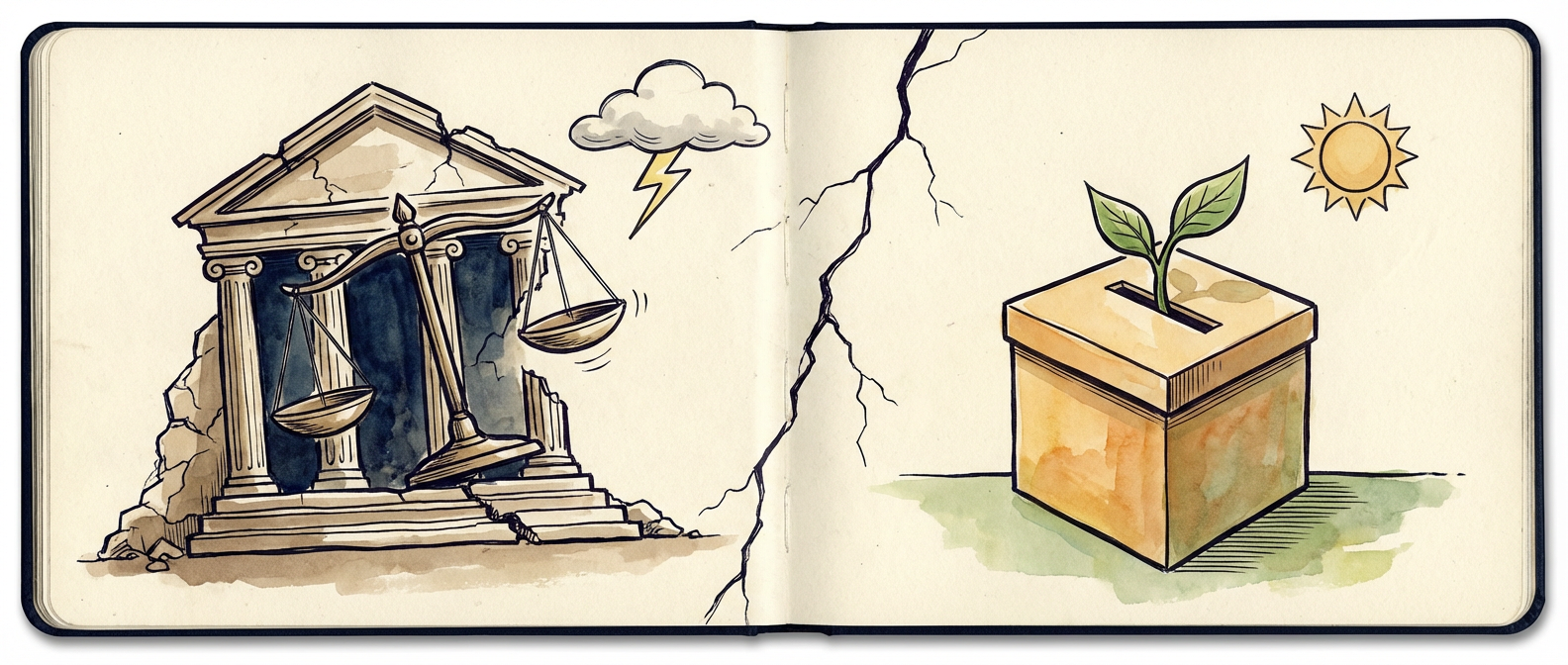
But the human cost of this transformation becomes clear in courthouse hallways across Mexico, where nearly a quarter of federal judges have chosen resignation over election. The Mexican Bar Association found that 23% of sitting judges have left, creating an immediate crisis: who handles the thousands of pending cases involving everything from commercial contracts to criminal appeals? In Guadalajara’s federal courthouse, three of seven courtrooms now sit empty. In Mexico City’s corporate district, business lawyers report delays of six to eight months for commercial litigation that previously moved within weeks.
The scale of the upcoming June 2026 elections is mind-boggling. Seven thousand judicial positions will appear on ballots. Voters must make choices about candidates whose qualifications they can’t reasonably evaluate. A typical ballot in Puebla will list forty-three judicial candidates, from family court judges to appellate justices. The National Electoral Institute faces the unprecedented task of organizing this massive undertaking with a 12 billion peso budget—roughly equivalent to running three presidential elections simultaneously.

The Courtroom Vacuum and Its Immediate Consequences
The resignation wave has created what legal scholars call a “judicial drought” in critical areas of Mexico’s economy. Consider the port city of Veracruz, where international shipping contracts worth billions of dollars await resolution in federal commercial courts. Two of the city’s four federal judges resigned in October, leaving importers and exporters in legal limbo. Local attorney Maria Elena Vásquez reports that her firm’s corporate clients now route major contracts through arbitration in Miami rather than risk Mexican federal courts.
Criminal justice faces even steeper challenges. Federal prosecutors in border states like Tamaulipas handle complex cases involving organized crime, drug trafficking, and immigration violations. When federal judges resign mid-case, defendants in pre-trial detention face extended waits that strain constitutional requirements for speedy trials. The Nuevo Laredo federal courthouse, which processes hundreds of immigration cases monthly, now operates with temporary judges borrowed from other jurisdictions. The backlog affects both Mexican citizens and asylum seekers.
Small business owners feel these disruptions most acutely. Federal courts handle disputes involving federal tax obligations, labor law violations, and regulatory compliance. A restaurant owner in Tijuana fighting a federal tax assessment that could close his business now waits eight months for a hearing that would have occurred within six weeks under the previous system. Multiply this scenario across thousands of small enterprises, and the economic ripple effects become substantial.
International Concerns Meet Domestic Support
The Inter-American Commission on Human Rights Statement reflects broader international unease about judicial independence under popular election systems. Foreign investors worry about contract enforcement and property rights protections when judges must consider electoral consequences alongside legal precedent. The American Chamber of Commerce in Mexico reports that member companies are restructuring major investments to minimize exposure to federal court jurisdiction.
However, this international skepticism contrasts sharply with domestic opinion, where polling shows 68% approval for the judicial reforms. This disconnect reflects fundamentally different perspectives on judicial legitimacy. Many Mexicans view the current system as elitist and disconnected from public needs, pointing to corruption scandals and decisions that seemingly favor powerful interests. For voters in working-class neighborhoods of Mexico City or rural communities in Oaxaca, the idea that judges should answer to popular will rather than legal establishment norms resonates strongly.
President Claudia Sheinbaum’s administration frames the reform as democratic renewal, arguing that appointed judges lack accountability to the citizens whose lives their decisions affect. This narrative gains force in communities where residents feel federal courts have failed to deliver justice in cases involving environmental damage, labor rights, or police misconduct. Reform supporters see judicial elections as a mechanism for bringing courts closer to popular concerns about fairness and accessibility.
The Practical Politics of Judicial Campaigns
The mechanics of campaigning for judicial office present unprecedented challenges for both candidates and voters. Unlike executive or legislative candidates who can campaign on policy platforms, judicial candidates must navigate ethical constraints against making specific promises about how they would rule on legal questions. Early candidate announcements suggest most will emphasize general themes like fighting corruption, improving case processing times, and increasing court accessibility.
Funding these campaigns creates particularly thorny problems. Traditional judicial appointment processes, whatever their flaws, insulated judges from financial obligations to campaign donors. Electoral campaigns require money for advertising, staff, and voter outreach, potentially creating conflicts of interest when donors later appear in court. The National Electoral Institute is developing financing rules, but enforcement mechanisms remain unclear, especially for local judicial races with limited oversight capacity.
Voter education represents perhaps the greatest challenge. How do citizens evaluate candidates for specialized positions requiring extensive legal training and experience? Early focus groups conducted by the Electoral Institute reveal that voters plan to rely heavily on party endorsements and simple biographical information like previous government service or private practice experience. This suggests that judicial elections may function more like traditional political contests than technical merit evaluations.
Measuring Success in an Unprecedented Experiment
The ultimate test of Mexico’s judicial reform will unfold in courtrooms and law offices across the country over the next several years. Success metrics remain contested, with reform supporters emphasizing public trust and accessibility measures while critics focus on case processing efficiency and legal consistency. Both sides will scrutinize judicial decision patterns to determine whether elected judges produce meaningfully different outcomes than their appointed predecessors.
The international legal community watches this experiment with intense interest, as Mexico’s experience could influence judicial reform debates throughout Latin America. If elected judges demonstrate competence while maintaining public legitimacy, other democracies grappling with questions about judicial accountability may consider similar approaches. Conversely, if the system produces inconsistent rulings or political interference in legal decisions, it may warn about the limits of electoral democracy in judicial governance.
What remains certain is that Mexico has embarked on a constitutional transformation with profound implications for millions of citizens, businesses, and institutions that depend on federal courts for legal resolution. The empty courthouses of today represent either the painful birth pangs of democratic renewal or the dangerous erosion of judicial independence. The answer won’t emerge in academic debates, but in the daily reality of legal practice across Mexico’s diverse communities. How this experiment unfolds will shape not only Mexico’s legal system, but broader conversations about democracy, accountability, and the rule of law throughout the Americas.

How Flood Insurance Withdrawal Transfers Black Land to Bond Markets: Risk Rating 2.0 and the New Redlining
Retiring Land, Removing People: The Conservation Reserve Program as Racialized Dispossession in the Mississippi Delta
The Honest to Goodness Truth on Getting a US Credit Card for Canadians
About Author
