Who Really Owns the Tap? Unpacking Water Privatization When a municipal water system crumbles, the autopsy usually rattles off technical failures: busted pipes from another era, treatment plants that can’t keep up, a balance sheet drowning in red ink. But water has never been just an infrastructure problem. It’s a battleground. A fight over who
Water as a Commodity, Not a Right Water privatization is rarely just about water. It is a political and economic project that reshuffles control over a life-sustaining resource—who gets to profit from its distribution, and who picks up the tab when things go wrong. For Dr. Samara Patel, the real question isn’t whether private capital
Beyond Seawalls and Solar Panels When policymakers discuss climate adaptation, the conversation almost always defaults to infrastructure: seawalls, levee systems, drought-resistant crops, upgraded electrical grids. The framing is seductively simple. If we can just engineer our way out of this, the thinking goes, then adaptation becomes a matter of allocating sufficient budgets and deploying the
When cities announce new seawalls, drought-resistant crop varieties, or early-warning systems for extreme weather, the framing is almost always technical. Engineers and planners present adaptation as a matter of designâidentifying risks and deploying solutions. This framing is not merely incomplete; it is ideologically motivated. Treating climate adaptation as a technical challenge obscures the political decisions
When policymakers draft environmental regulations, they often frame their work as universally beneficial. Cleaner air, safer water, and reduced emissions sound like public goods that lift all boats equally. But this framing obscures a stubborn reality: environmental policy does not land evenly across the social landscape. Low-income communities consistently absorb the costs of environmental degradation
The Deceptive Arithmetic of Efficiency When the Department of Government Efficiency began its systematic review of federal expenditures in early 2025, foreign aid was an obvious target. It has all the qualities that make for compelling political rhetoric: it appears discretionary, it benefits foreigners rather than American voters, and it exists at sufficient remove from
The Scale of the Suspension In February 2025, the Department of Government Efficiency, operating under Elon Musk’s leadership, suspended roughly 85 percent of USAID’s foreign assistance contracts. This was not a gradual policy adjustment or a targeted reform. By any measure, it was a near-total halt to the machinery through which the United States had
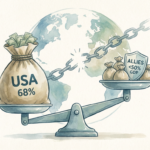
The Structural Problem Behind the Numbers The NATO Summit scheduled for The Hague in June 2025 arrives at a strange moment in alliance history. For the first time since the 2014 Wales Summit formalized a collective 2% GDP defense spending pledge, the conversation has shifted decisively toward raising that baseline. The question on the table
The August 2025 Enforcement Cliff Nobody Really Saw Coming Most trade disputes announce themselves gradually. Tariffs creep upward. Subsidies get quietly expanded. Regulatory standards drift apart over years of accumulated precedent. The enforcement deadline for the European Union’s AI Act high-risk provisions on August 2, 2025, did none of these things. It arrived like a
The Arithmetic of Constraint Germany’s federal election on February 23, 2025, looks straightforward on the surface but gets complicated fast. Friedrich Merz’s CDU/CSU took roughly 28.5% of the vote, making it the Bundestag’s largest faction. Easy to read that as a mandate for center-right governance. But 28.5% in a fragmented parliament isn’t governing authority. The