Digital Democracy’s Double Edge: How Online Tools Are Reshaping Political Power
The New Political Landscape
Politics has moved online, and it’s changing everything. Nearly three-quarters of voters under 35 get their political news mainly from social media now. That’s a complete break from how older generations consume political information, and honestly, it’s reshaping how political movements start and spread in ways we’re still figuring out.
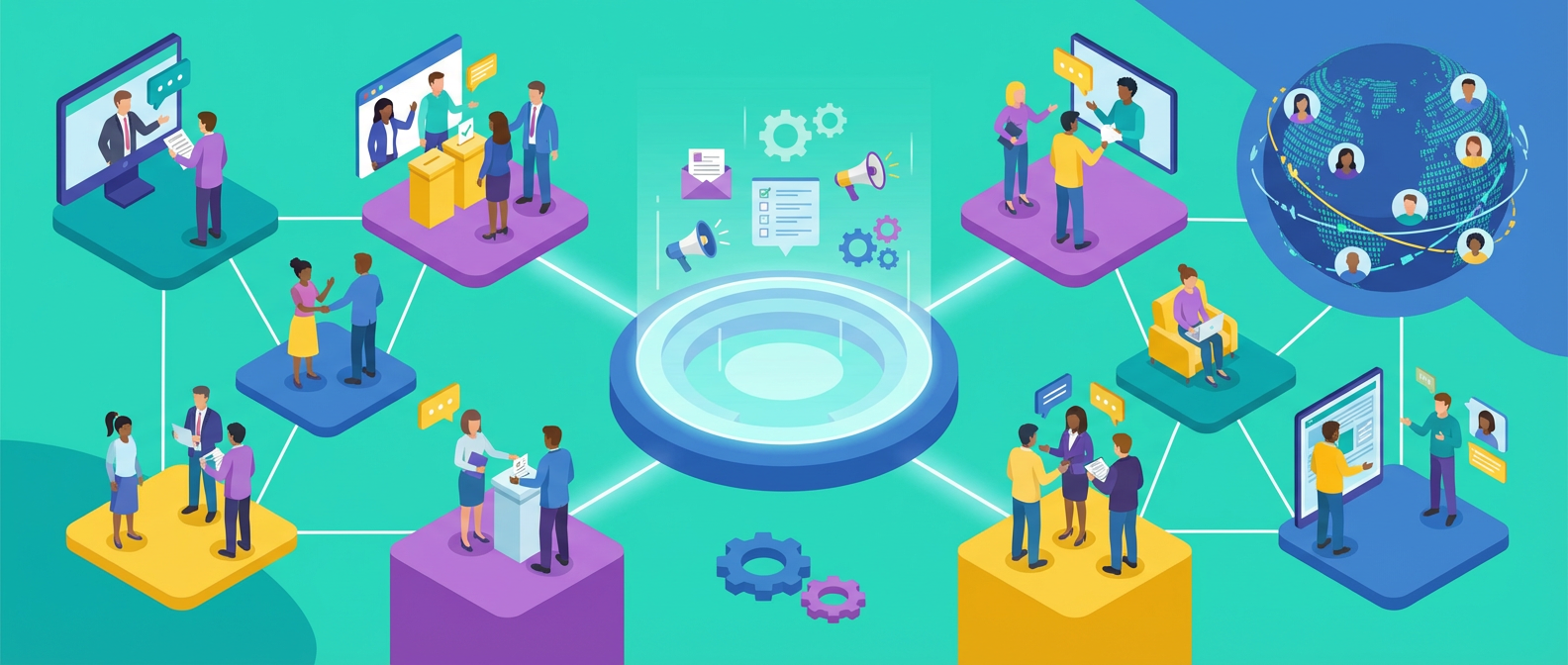
But this goes way beyond just reading news on Instagram. Apps like WhatsApp and Telegram have become essential tools for organizing protests, running voter registration drives, and coordinating community action around the world. These platforms give organizers both privacy and the ability to reach people who might never show up to a traditional political meeting.
The problem is that the same technology that helps grassroots organizers also opens up new ways to mess with elections. The Brennan Center democracy research has shown how these platforms can be turned into weapons against fair elections. I’m starting to wonder if our current laws and regulations are even close to adequate for protecting democracy in the digital age.
The Algorithmic Amplification Problem
Here’s what really gets me: social media algorithms consistently push content that makes people angry. Facebook, X, TikTok, YouTube—they all reward the most inflammatory posts because anger keeps people scrolling. This creates online spaces where the angriest, most extreme voices get the biggest megaphones while thoughtful political discussion gets buried.
This isn’t just annoying—it’s actually warping our politics. When algorithms systematically boost divisive content, they’re shaping what people think about political issues and candidates in ways that might not reflect what most people actually believe. Research has linked this to increased polarization and the spread of conspiracy theories across different democratic countries.
The tech companies have made some changes to their content policies and tweaked their algorithms after getting criticized, but these fixes usually come slowly and only after problems explode into public view. The core business model—making money by manipulating emotions—hasn’t really changed. This makes me think we’ll need government regulation rather than hoping these companies will fix themselves.
Foreign Interference in the Digital Age
Foreign governments are now regular players in major elections, and they’re getting good at it. Intelligence agencies and researchers have tracked coordinated influence campaigns on X, Facebook, and TikTok before big elections in the US, UK, Germany, and other democracies.
These operations are sophisticated. They create fake grassroots movements, buy targeted ads using detailed user data, and strategically amplify existing social divisions. Unlike old-school propaganda, digital influence campaigns can target specific demographics and regions with surgical precision. Most people never realize they’re being targeted.
The tricky part for election officials and cybersecurity experts is telling the difference between legitimate political advocacy and foreign manipulation. The platforms have built detection systems and work with government agencies, but influence techniques evolve faster than the defenses against them. It’s an ongoing arms race.
Democratizing Campaign Tools
One genuinely positive development: open-source software has given small campaigns access to tools that used to cost a fortune. Modern campaigns can use free apps for voter databases, volunteer coordination, and targeted outreach that once required expensive consultants.
This has leveled the playing field somewhat. Insurgent candidates and grassroots movements can now compete against political machines using many of the same basic tools. Small campaigns can access detailed voter data, run targeted outreach, and coordinate volunteers without the massive budgets that campaigns used to need.
Digital fundraising has also made it easier for candidates to raise money through small donations from supporters across the country. But this creates new pressures too. Campaigns now have to maintain constant online engagement to keep the money flowing, which can distort priorities and messaging.
Evaluating Democratic Outcomes
So are digital tools good or bad for democracy? The honest answer is both. Supporters point out that social media and organizing apps have brought more people into politics, especially groups that were previously shut out. Politicians can now communicate directly with constituents in real-time, and citizens can organize rapidly around issues they care about.
Critics have plenty of evidence that digital platforms have made politics more fragmented, spread misinformation, and eroded the shared facts we need for democratic debate. The same tools that help grassroots organizing also help extremist movements coordinate and enable harassment of politicians, journalists, and election workers.
Organizations like Democracy Now continue tracking both the democratic benefits and authoritarian risks of digital political tools. Their research suggests that the final impact of these technologies will depend more on how we choose to regulate and structure their use than on the technologies themselves.
We need to keep studying this as digital tools evolve and new platforms emerge. Citizens, policymakers, and tech developers all need to grapple with the complex trade-offs in digital democracy rather than buying into simple stories about technology being either salvation or doom for democratic institutions.

Why the House Judiciary Committee’s Twitter Files Hearing Revealed More About Process Than Platforms
The Uneven Exchange: How Carbon Markets Serve Corporations, Not Communities
The Carbon Market Racket: Who Really Wins When Pollution Gets a Price Tag
About Author
