The DOGE Doctrine: Measuring the Real Governance Costs of Elon Musk’s Federal Workforce Reduction Campaign
Why Simple Math Fails Us Here
When Elon Musk’s Department of Government Efficiency set out to reduce federal employment, the proposition seemed arithmetically straightforward. Fewer workers equals lower payroll costs. Streamlined bureaucracy equals faster service delivery. The math appeared self-evident, the kind of efficiency calculation that works reliably in private sector operations where you can measure productivity in quarterly earnings. But federal governance operates under fundamentally different constraints than a corporation, and this distinction matters enormously when we attempt to measure what DOGE’s campaign has actually cost us.
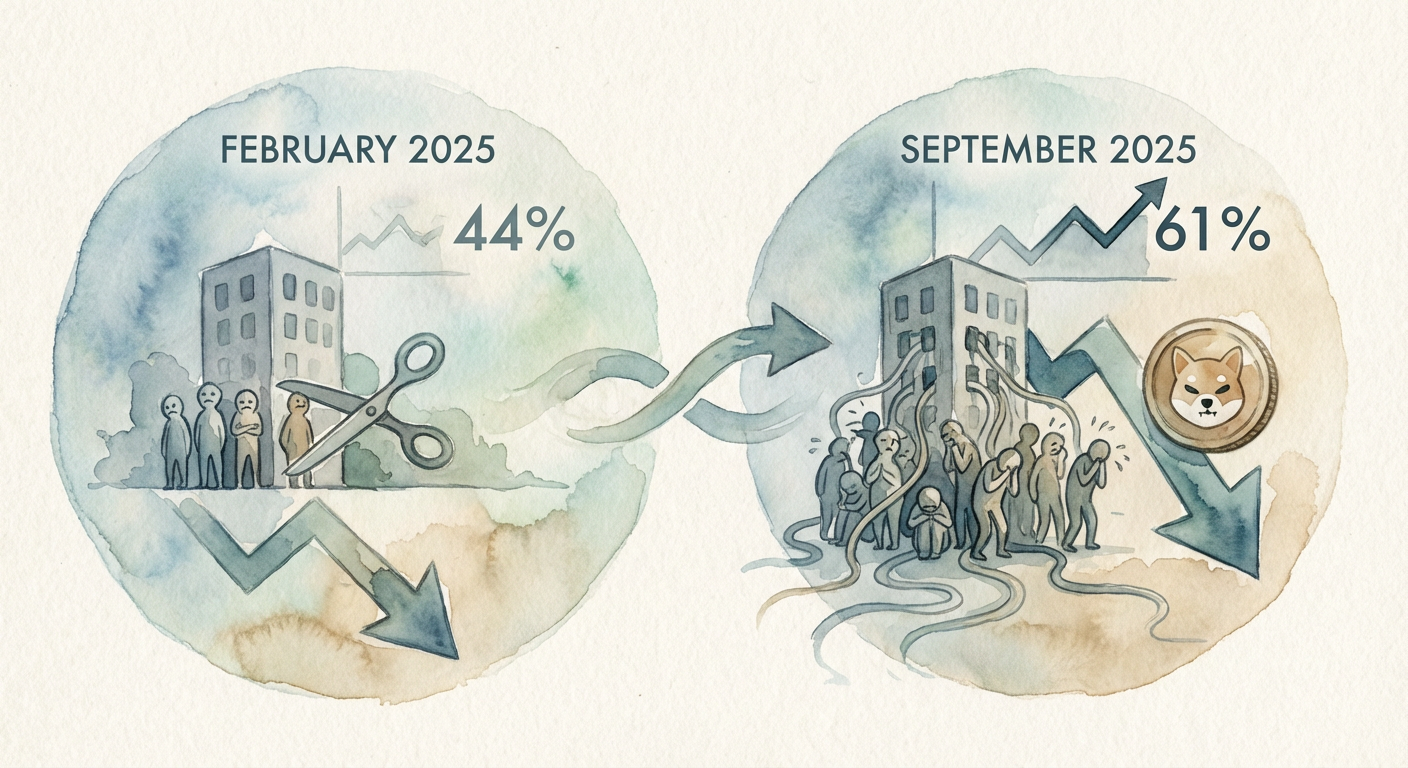
The challenge begins with the question of what we are measuring. Are we calculating only direct salary savings? Are we accounting for the friction costs of rapid institutional change? Do we include the legal expenses incurred when courts intervene? The answer to “what does this policy cost” depends entirely on how we define the boundary of our analysis, and therein lies the central dispute among economists, legal scholars, and governance experts who have examined DOGE’s first year of operations.
This distinction between surface-level savings and actual economic impact has proven to be one of the most misunderstood aspects of the workforce reduction campaign. Politicians and advocates have cited impressive-sounding numbers without acknowledging the hidden costs that accumulate silently within federal agencies and the broader economy.
The Official Narrative and the Numbers Behind It
According to Office of Personnel Management data, DOGE facilitated the departure of more than 75,000 federal employees through voluntary buyout programs and reductions-in-force by mid-2025. That figure alone represents roughly five percent of the total federal civilian workforce, a reduction that advocates presented as a major victory for taxpayer interests. The campaign relied on accelerated early retirement packages and attrition rather than immediate mass layoffs, creating what management consultants might describe as a controlled contraction.
The fiscal argument for these reductions rested on straightforward annual payroll calculations. A federal employee earning a median salary of approximately 65,000 dollars annually, plus benefits, represents roughly 100,000 dollars in total compensation cost. Multiply that across 75,000 employees and you arrive at approximately 7.5 billion dollars in annual savings. Over a ten-year budget window, before accounting for inflation and other variables, this translates to compelling headline figures.
This is precisely the number that DOGE advocates have cited repeatedly when defending their campaign to skeptical lawmakers and journalists. It is also precisely the number that tells us almost nothing about whether the policy has been economically rational.
The Hidden Costs That Change Everything
The Congressional Budget Office conducted a comprehensive analysis of DOGE-linked restructuring, and their June 2025 report revealed a far more complicated fiscal picture than the headline savings suggested. While the CBO confirmed approximately 135 billion dollars in potential ten-year savings from reduced personnel costs, they also identified 280 billion dollars in implementation and litigation expenses that had not been included in the administration’s initial projections. These costs included severance packages more generous than standard separation procedures, temporary contractor hiring to backfill critical functions, and most significantly, the legal defense of agency actions challenged in federal court.
The litigation expenses deserve particular attention. Federal courts issued over 90 injunctions against specific DOGE-directed agency actions between February and October of 2025 alone. Legal scholars at Georgetown Law School have characterized this period as “administrative law chaos,” a phrase that captures something important about what happens when executive branch restructuring outpaces the deliberative processes that courts have established to review such actions. Each injunction represents not merely a legal setback but a trigger for expensive reversion procedures, retroactive hiring, and complicated negotiations about compliance timelines. These are not theoretical costs. They appear as line items in agency budgets, as consulting fees paid to outside counsel, as resources diverted from actual program delivery.
Visit the Congressional Budget Office DOGE Cost Analysis and you will find detailed breakdowns of these implementation expenses, which when subtracted from the projected savings leave us with a net fiscal impact that approaches zero over the ten-year budget window, and potentially goes negative in the years immediately following the restructuring.
The Service Delivery Crisis That Numbers Alone Cannot Capture
But perhaps the most revealing metric involves not budget spreadsheets but actual citizen experience. The Social Security Administration reported a 340 percent increase in average wait times for benefits processing by August 2025, following personnel reductions of approximately 7,000 employees from that agency alone. This is not an abstract statistic. It means seniors waiting months longer to access retirement benefits they have earned through decades of payroll contributions. It means disability applicants sitting in genuine uncertainty during some of the hardest stretches of their lives.
The economic costs of this degradation in service delivery ripple outward in ways that budgetary analysis struggles to capture. Delayed benefit payments force some recipients to exhaust savings or seek emergency assistance. Contractors hired to handle overflow work cost significantly more per unit than permanent employees. Other agencies strip experienced staff to help SSA maintain minimal service levels, creating secondary disruptions throughout the federal system. None of these costs appear as line items in DOGE’s official accounting, yet all of them represent genuine economic friction imposed on the broader society.
The polling data reinforces the scope of this problem. A Pew Research Center Government Trust and DOGE Survey 2025 conducted in September found that 61 percent of Americans believed DOGE cuts had negatively affected federal service delivery, a substantial increase from 44 percent who held that view in February. This shifting perception reflects not partisan posturing but lived experience. Americans have encountered closed passport processing centers, delayed tax refunds, reduced park maintenance, and dozens of other minor but collectively significant degradations in the federal services they depend upon.
Reconciling the Evidence and Drawing Conclusions
So what do we actually know about DOGE’s real cost? The evidence suggests a far more ambiguous outcome than either advocates or critics have been willing to acknowledge. The campaign did succeed in reducing federal payroll expenses. The reduction in personnel numbers is real and measurable. But the net fiscal benefit, when you account for implementation costs, litigation expenses, and the temporary hiring necessary to maintain minimum service levels, appears to be substantially smaller than the headline figures suggested. The CBO’s analysis suggests we may have exchanged 135 billion dollars in theoretical payroll savings for 280 billion dollars in concrete operational costs. That is a bad trade by any measure.
More troubling still is the degradation in service delivery that has accompanied the workforce reduction. This is not merely a matter of bureaucratic efficiency in some abstract sense. It affects real people navigating real systems during moments when they most depend on government function. The 340 percent increase in Social Security wait times cannot be dismissed as an acceptable cost of fiscal discipline. It represents a genuine reduction in quality of life for millions of citizens.
The DOGE campaign was premised on the assumption that federal government operates with substantial inefficiency and waste that can be painlessly excised through appropriate restructuring. The first year of implementation suggests this assumption was significantly mistaken. Federal agencies, for all their documented shortcomings, appear to operate with lower slack capacity than the restructuring plan anticipated. When you reduce employment rapidly across dozens of agencies simultaneously, you do not primarily eliminate waste. You eliminate function.
This conclusion may disappoint those who hoped government could be dramatically streamlined without noticeable consequence. It should also give pause to those who assume federal bureaucracy is simply bloated and ready to collapse under its own inefficiency. The actual picture is more sobering. American government appears to be operating close to its functional limits. Reducing its workforce by five percent generates measurable deterioration in service delivery and produces implementation costs that nearly eliminate projected fiscal savings. This is not an argument against all government reform. It is an argument for considerably more caution and considerably more honesty about what restructuring actually costs.
What aspects of this analysis do you find most compelling or most problematic? The fiscal calculations, the service delivery evidence, or the broader question of government capacity?

The Narrative Infrastructure of Environmental Review: How Documentation Asymmetry Shapes Who Wins in EIA Conflicts
The Carbon Offset Shell Game: Why Markets Protect Corporate Books, Not People
The Honest to Goodness Truth on Getting a US Credit Card for Canadians
About Author
