The Accountability Gap: Why Regulatory Oversight Remains Democracy’s Unfinished Business
The Illusion of Simple Solutions
When politicians promise to “cut red tape” or “strengthen oversight,” they’re trafficking in soundbites that hide a real problem at the heart of democratic governance. Regulatory agencies exist because markets fail, externalities persist, and complex modern societies require specialized expertise to function safely. Yet these same agencies operate with delegated authority that can seem distant from electoral accountability, creating what political scientists call the “delegation dilemma.” The public wants both effective regulation and democratic control. The problem? These goals often pull in opposite directions.
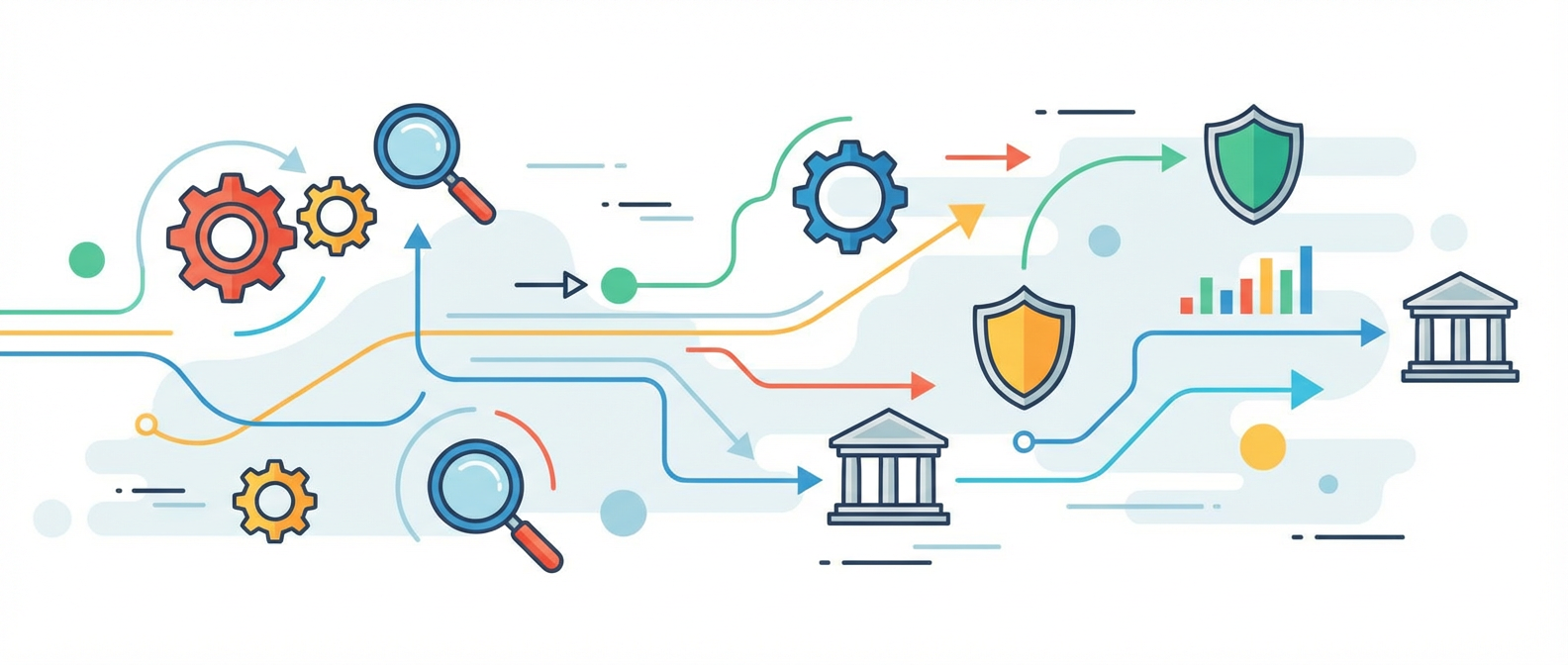
Take the Environmental Protection Agency’s recent methane emission standards for oil and gas operations. The technical complexity of measuring fugitive emissions across thousands of well sites requires specialized knowledge that few elected officials possess. Congress could never write legislation detailed enough to cover every permutation of extraction technology and geological condition. So it delegates broad authority to the EPA, which then faces criticism for being “unelected bureaucrats” making decisions that affect entire industries. This happens across dozens of agencies and thousands of regulations annually. It’s exhausting to track.
The oversight mechanisms designed to bridge this gap reflect competing theories about how democracy should work. Congressional oversight hearings, judicial review, public comment periods, and inspector general reports each represent different assumptions about who should have the final word when technical expertise conflicts with political preferences. None of these mechanisms alone solves the accountability problem. Their interaction creates a complex ecosystem that even seasoned observers struggle to navigate. I’ve watched congressional hearings where members spend more time grandstanding than actually learning how programs work.

The Mechanics of Accountability
Congressional oversight operates through multiple channels, each with distinct strengths and blind spots. Authorization committees theoretically set policy direction, appropriations committees control funding, and oversight committees investigate implementation. In practice, these roles blur and conflict messily. The House Energy and Commerce Committee might authorize the FDA to regulate tobacco products, while the Agriculture Committee protests that the same regulations hurt farmers in their districts. Meanwhile, appropriations riders quietly reshape regulatory priorities through budget restrictions that receive little public attention.
Judicial review provides another layer of accountability, but courts apply different standards of scrutiny depending on the type of agency action under review. The Supreme Court’s recent emphasis on the “major questions doctrine” requires agencies to show clear congressional authorization for economically or politically significant rules. This sounds reasonable until you consider that Congress often deliberately uses vague language to build coalitions. They leave agencies to fill in crucial details that determine whether policies succeed or fail.
Inspector General offices, created in the late 1970s to provide independent oversight, have evolved into sophisticated audit operations with significant investigative capabilities. The EPA’s IG office publishes detailed reports on everything from Superfund site management to cyber security vulnerabilities. Yet these reports often disappear into the Washington ecosystem with little sustained public attention. Their careful documentation gets overshadowed by partisan debates about regulatory philosophy.
Evidence from the Implementation Trenches
Recent data from the Government Accountability Office shows the gap between oversight theory and practice. GAO’s annual report on federal program duplication identifies billions in potential savings from better coordination between agencies, yet the same problems recur year after year. The Department of Homeland Security alone has been on GAO’s “high risk” list for management challenges since 2003. This persists through multiple reorganization efforts and oversight interventions.
A closer examination of specific cases reveals why good intentions often produce disappointing results. When Congress directed the Department of Education to improve oversight of for-profit colleges in 2010, the resulting “gainful employment” regulations took six years to finalize, faced multiple court challenges, and were ultimately repealed and replaced twice as different administrations took power. The regulatory whiplash made meaningful assessment of the policy’s effectiveness nearly impossible, while students continued enrolling in programs of questionable value. It’s frustrating to watch.
The Food and Drug Administration’s handling of opioid prescription guidelines offers another instructive example. Congressional pressure to address the opioid crisis led to tighter prescribing standards, but implementation varied dramatically across medical specialties and geographic regions. Emergency medicine physicians in urban trauma centers operated under different effective rules than rural family practitioners. This created a patchwork of enforcement that undermined both public health goals and regulatory consistency.
Structural Barriers to Effective Oversight
The real challenge isn’t the good faith efforts of oversight actors, but structural mismatches between democratic accountability mechanisms and regulatory complexity. Congressional committees typically reorganize around major political priorities every few years. This disrupts the institutional memory necessary for sustained oversight of long-term regulatory programs. Staff turnover compounds this problem. Experienced committee investigators move to lobbying firms or think tanks just as they develop deep expertise in specific regulatory domains.
Information asymmetries create additional complications. Agencies possess detailed data about program implementation that they may have strategic reasons to present selectively. Congressional staff lack the time and resources to verify technical claims about emission reduction calculations or pharmaceutical safety protocols. Interest groups on all sides provide competing analyses that often reach contradictory conclusions from the same underlying data. Who’s supposed to sort through all this?
The political calendar makes these structural problems worse. Regulatory programs often require decades to show measurable results, but electoral cycles create pressure for immediate accountability. A water treatment program might need fifteen years to demonstrate reduced cancer rates in downstream communities, but congressional majorities change every two years. This temporal mismatch encourages oversight that focuses on process compliance rather than outcome effectiveness.
Toward More Sophisticated Democracy
Improving regulatory oversight requires acknowledging that democratic accountability and technical competence exist in productive tension rather than opposition. Some promising innovations point toward more sophisticated approaches. The Congressional Budget Office’s expansion into regulatory impact analysis provides legislators with independent technical expertise. Several agencies have experimented with citizen advisory panels that bring affected communities directly into ongoing oversight conversations rather than relegating public input to formal comment periods.
The most successful oversight mechanisms tend to combine multiple accountability streams rather than relying on single solutions. The Federal Reserve’s combination of congressional oversight, inspector general audits, and public disclosure requirements creates cross-cutting pressures that no single interest group can easily capture. Similar multi-layered approaches might work for other regulatory domains, though the specific design would need to account for the unique technical and political characteristics of each area.
The evidence suggests that regulatory oversight works best when it operates continuously rather than episodically, when it combines technical expertise with political accountability, and when it creates incentives for agencies to explain their decisions clearly to multiple audiences. These insights point toward institutional reforms that strengthen rather than simplify oversight mechanisms. We have to accept complexity as the price of democratic governance in a technical age.
These questions deserve sustained attention from anyone who cares about effective governance. What other models of democratic oversight might work better than our current approaches? How do other democracies balance technical expertise with political accountability? The conversation continues in the comments, and through the ongoing work of making democracy function in an increasingly complex world.

The Carbon Offset Illusion: Why Market Mechanisms Serve Capital, Not Climate Justice

Why Immigration Enforcement Varies So Dramatically Across Presidential Administrations
KDP Select Pros & Cons: Why KDP Select is Great for New Activist Writers
About Author
