Why Climate Policy Frameworks Keep Breaking Down at the Implementation Stage
The Implementation Gap Between Climate Ambitions and Energy Realities
Climate policy frameworks have a weird problem: they create impressive commitments at international and national levels, but fall apart when they hit the messy realities of actually transforming energy systems. I’ve seen this pattern repeat across different political systems, economic contexts, and technological environments. It suggests the problem isn’t in the specific details of any particular policy approach, but in fundamental tensions between how we design climate governance and how energy transitions actually happen.
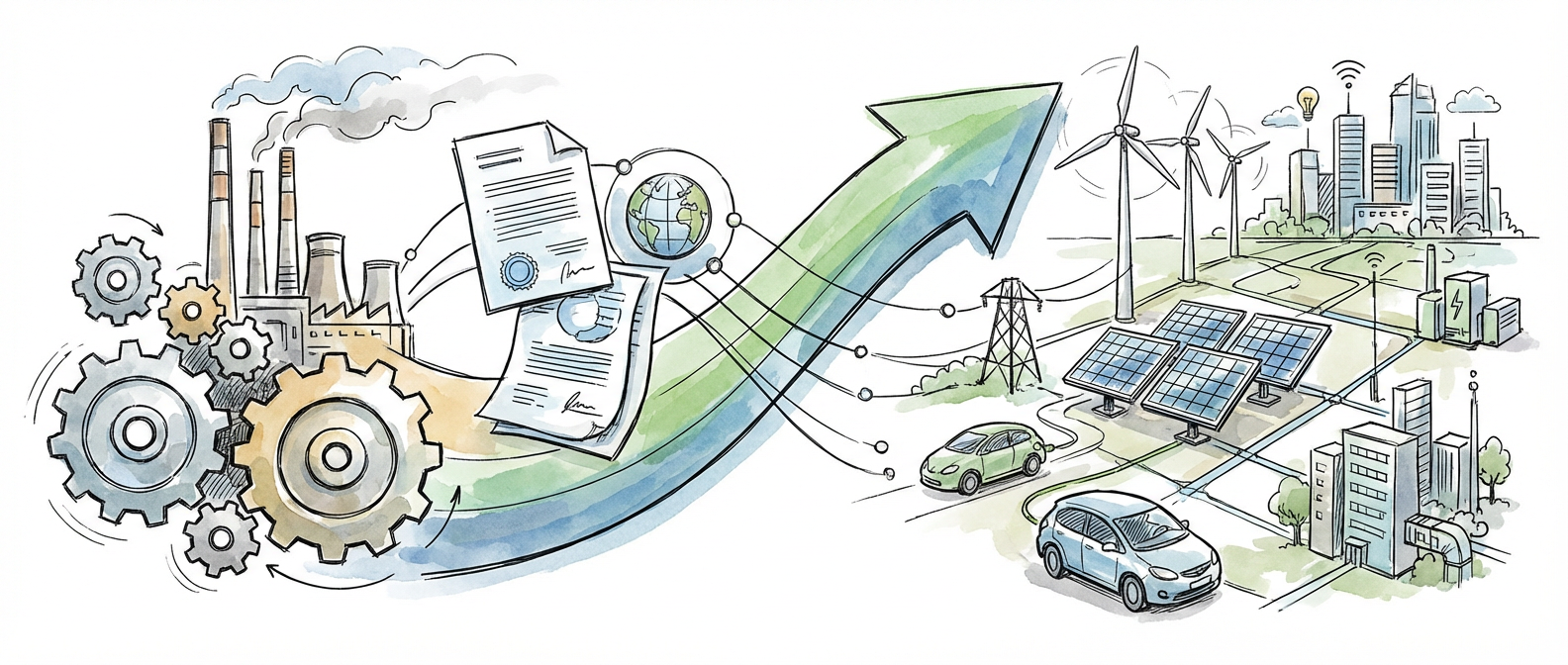
The core problem is a mismatch in timing and scale. Climate policy frameworks operate on electoral cycles and international negotiating rounds. Politicians need measurable commitments within timeframes that matter politically. But energy transitions follow a completely different logic. They depend on infrastructure replacement cycles, technological learning curves, and deep-rooted behavioral patterns that play out across decades. When policymakers try to speed up these transitions through regulatory frameworks designed for more conventional policy areas, they hit resistance that looks like political opposition but often reflects real structural constraints.
Take the European Union’s experience with its Green Deal framework. The policy architecture is sophisticated multilevel governance, incorporating everything from carbon border adjustments to just transition mechanisms. But implementation has shown that the framework’s success depends heavily on coordination across policy areas that have historically operated independently: trade policy, industrial policy, agricultural policy, and regional development policy. The challenge isn’t just technical coordination. It’s managing the different institutional logics and constituencies that shape each area.

Institutional Fragmentation and Policy Coherence Challenges
Energy transitions require unprecedented coordination across institutional boundaries that were designed for a different era. Traditional energy policy focused primarily on making sure we had adequate supply at reasonable prices. Environmental considerations were treated as external constraints to be managed through separate regulatory frameworks. Climate policy frameworks try to flip this relationship, making decarbonization the primary objective while keeping energy security and economic competitiveness as secondary goals.
This flip creates serious coordination challenges because the institutions responsible for energy security, economic development, and environmental protection have evolved different expertise, different stakeholder relationships, and different decision-making processes. Energy agencies think in terms of system reliability and fuel diversity. Economic development agencies focus on industrial competitiveness and employment impacts. Environmental agencies prioritize emission reductions and ecological protection. Climate policy frameworks require these agencies to operate as a coherent system, but they lack the institutional mechanisms to resolve conflicts when their objectives diverge.
The problem gets worse when climate policies encounter what political scientists call “venue shopping” by affected interests. When renewable energy developers face obstacles in environmental permitting processes, they lobby economic development agencies for streamlined approval procedures. When traditional energy industries face new carbon pricing mechanisms, they seek relief through trade policy or industrial competitiveness arguments. These dynamics don’t reflect simple rent-seeking behavior, but rational responses to institutional fragmentation that climate policy frameworks haven’t adequately addressed.
The Scale-Dependent Nature of Energy System Change
Energy transitions have strong scale dependencies that complicate the design of effective policy frameworks. At the household and firm level, energy decisions depend on highly specific local conditions: building characteristics, local energy prices, available financing mechanisms, and social networks that shape technology adoption patterns. At the regional level, energy systems reflect historical development patterns, natural resource endowments, and existing infrastructure investments that create path dependencies. At the national level, energy policy must balance multiple objectives including energy security, economic competitiveness, and international commitments.
Climate policy frameworks typically try to manage this scale complexity through top-down governance structures that set national targets and delegate implementation to subnational authorities. This approach works reasonably well for policies that require uniform application of clear rules, such as emissions standards for manufactured products. But energy transitions require adaptive implementation that responds to local conditions while maintaining system-wide coherence. The challenge is designing policy frameworks that provide enough flexibility for local adaptation without undermining the credibility of overall commitments.
The German Energiewende shows both the potential and the limitations of this approach. The framework successfully got massive private investment in renewable energy by providing long-term price guarantees that reduced investment risks. However, the policy’s success in spurring renewable deployment created new challenges for grid stability and system integration that required different policy tools operating at different scales. The result has been ongoing tension between federal energy policy, state-level grid planning, and local land use decisions that shapes renewable energy development.
Market Design and Technological Uncertainty
Climate policy frameworks must navigate fundamental uncertainties about which technologies will prove most effective for deep decarbonization and how quickly costs will decline. This uncertainty creates a classic policy design dilemma: technology-neutral approaches may fail to generate enough scale to drive cost reductions in promising technologies, while technology-specific support risks locking in suboptimal solutions or creating stranded assets when better alternatives emerge.
The challenge gets worse because energy markets were designed for a technological environment characterized by large, centralized power plants with predictable fuel costs and well-understood operational characteristics. Renewable energy technologies have fundamentally different economic characteristics: high upfront capital costs but near-zero marginal operating costs, variable output that depends on weather conditions, and rapidly declining costs driven by global manufacturing scale rather than local resource extraction.
These characteristics require new market designs that can provide appropriate price signals for investment while maintaining system reliability. Climate policy frameworks typically address this challenge through parallel policy instruments: renewable energy standards to drive deployment, carbon pricing to internalize environmental costs, and various forms of capacity markets or grid service payments to ensure reliability. The interaction effects between these instruments are complex and poorly understood, creating ongoing debates about optimal policy design that reflect genuine uncertainty rather than simple ideological disagreement.
Building Adaptive Governance for Long-Term Transitions
The structural challenges facing climate policy frameworks suggest we need governance approaches that explicitly acknowledge uncertainty and build in mechanisms for adaptive management. This means moving beyond static policy frameworks toward institutional arrangements that can evolve as we learn more about effective decarbonization strategies and as technological capabilities change. Such adaptive governance requires stronger feedback mechanisms between policy implementation and policy design, more systematic attention to cross-scale coordination, and institutional structures that can manage trade-offs between different objectives as they emerge.
The most promising developments in this direction involve policy frameworks that combine long-term commitments with regular review mechanisms that allow for course corrections based on evidence about what works. These approaches typically involve independent technical institutions that can assess progress and recommend adjustments insulated from short-term political pressures, while maintaining democratic accountability through legislative oversight of major policy direction.
Understanding these structural dynamics is essential for anyone seeking to evaluate climate policy proposals or engage effectively in climate governance debates. The challenges are real and substantial, but they’re not insurmountable if we approach them with appropriate institutional tools and realistic expectations about the complexity of the task at hand.

Solitaire For Cash – Easy to Play and Great Fun
Who Profits When the Tap Runs Dry? The Political Economy of Water Privatization
Carbon Markets as Corporate Shields: How Emissions Trading Protects Polluters, Not People
About Author
